


01 — The tool
Free dynamic range meter for loudness range and crest factor
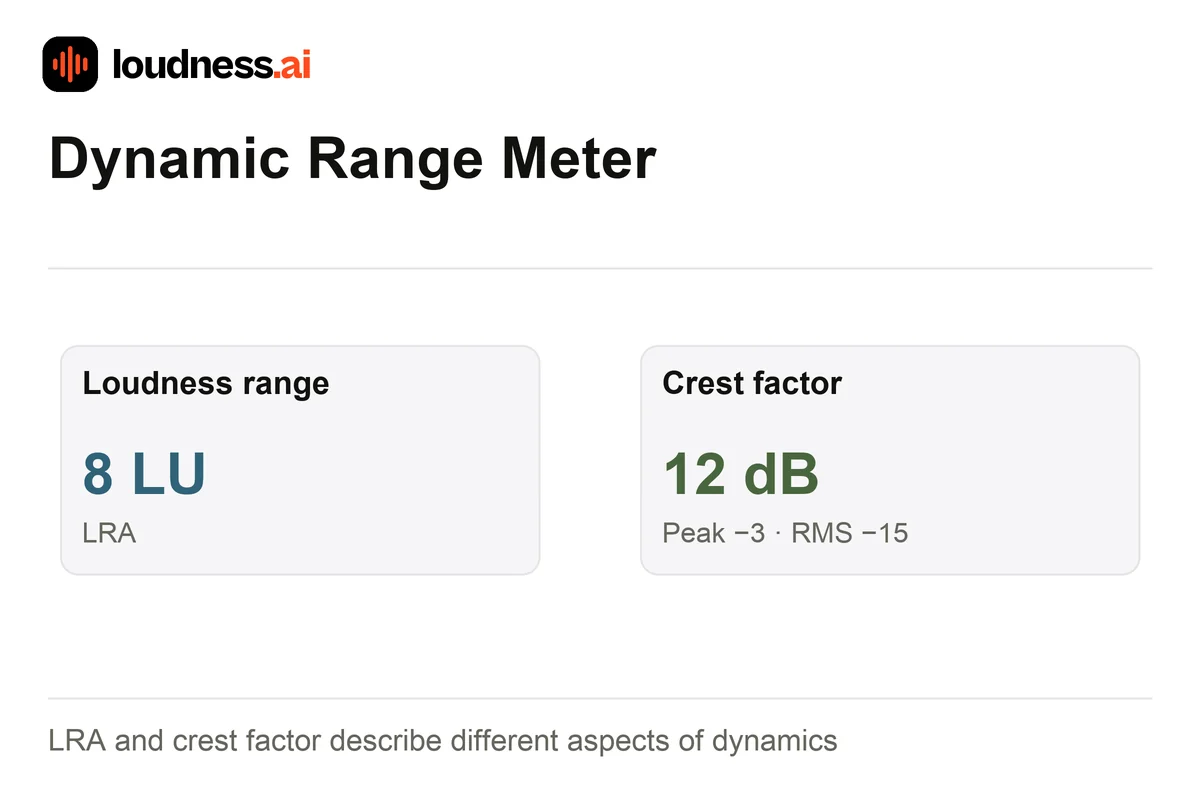
The Dynamic Range Meter gives you two distinct views of audio dynamics. Loudness range, or LRA, describes variation in sustained loudness. Crest factor compares sample peak with RMS level, showing how far short peaks sit above average signal energy. Read them together rather than calling either the single dynamic range of a song.
Upload MP3, WAV, M4A or FLAC audio and examine the level history alongside the summary. For example, a sample peak of −3 dBFS and RMS of −15 dBFS gives a 12 dB crest factor. That number describes peak-to-average contrast, not the difference between a quiet verse and loud chorus. Use the LUFS Meter for overall listening level.
02 — How it works
How to measure audio dynamics online
Choose comparable recordings
Upload the complete mix or speech file. When comparing two versions, use the same passage or arrangement so a longer pause or a different ending does not dominate your decision.
Separate range from peak contrast
Read LRA for sustained loudness changes and crest factor for peak-to-RMS contrast. Check the history to locate changes, then listen at those times to identify what produced them.
Save and compare your report
Save the report before you edit. Check again after using a compressor or limiter, or after changing the mix. Compare the numbers with what you hear. Keep the playback volume similar so a gain change does not skew your choice.
03 — Practical uses
Check dynamics in mixes, dialogue and revised exports
Before and after compression
Compare the source with an Audio Compressor export. Check the short peaks and the longer phrases by ear. Crest factor describes peaks above RMS; LRA gives a separate view of loudness changes over time.
Dialogue with level jumps
Find voice changes and louder phrases in the history. Listen to those points in the file. A wide range may come from the speaker’s delivery or from uneven recording levels. Choose a change based on the passage you hear.
Music mastering review
Compare a mix with its master. A higher or lower score does not always mean better sound. Use Music Mastering to prepare another version, then compare both at a similar listening level.
04 — Frequently asked questions
Dynamic Range Meter questions
Is this dynamic range meter free?
Yes. Measure a supported recording, inspect the readings and download a report for free. Analysis leaves the original audio unchanged, so you can compare it with another export.
Are LRA and crest factor the same?
No. LRA describes sustained loudness variation; crest factor describes sample peak above RMS. A percussive track can have prominent short peaks without a large difference between its sustained sections.
Does a high dynamic range mean better sound?
It depends on the sound and where people will hear it. Quiet acoustic music and speech for a noisy commute need different choices. Use the readings to explain what you hear. Judge the final result by listening, rather than picking the largest number.
Is this a classic DR-number meter?
This page reports LRA and crest factor. A classic DR score uses a different calculation and selection of audio blocks. Compare values from the same measurement method rather than treating different scores as interchangeable.