


01 — The tool
Free BPM finder for song tempo and beat matching
The free BPM finder analyzes a recording to estimate song tempo in beats per minute. Upload an MP3, WAV, M4A or FLAC and read the result. It also shows the estimated musical key, Camelot code, meter and tempo confidence. Use these as starting points for a beat grid, practice session or DJ set.
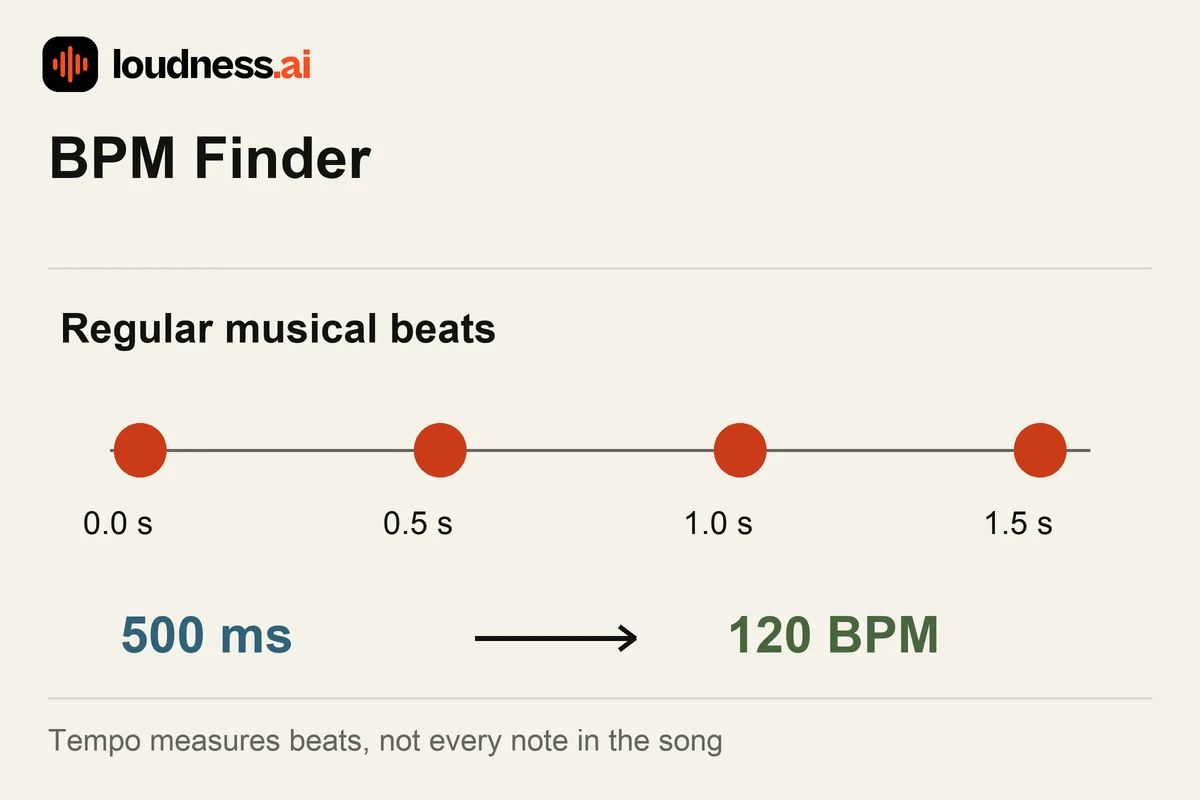
BPM describes the pulse you count, not the number of individual notes in the song. A recording may feel like 70 BPM or 140 BPM depending on whether you follow a half-time or double-time beat. Listen for the repeating pulse before deciding which interpretation matches your project. The Tap Tempo counter lets you check that pulse manually without uploading another file.
02 — How it works
How to find the BPM of a song online for free
Upload the song or rhythm recording
Choose the audio file you want to analyze. A section with a clear repeated beat is easier to check by ear than a free-time introduction. Keep the original recording available for listening.
Check the tempo against the pulse
Read the detected BPM and count along with the music. If the beat grid seems twice as fast or half as fast, compare the alternate interpretation before changing your project tempo.
Copy the BPM for your project
Copy the result into your track notes or project settings. Check the estimated meter and tempo confidence as well as BPM. Align several strong beats to test the grid. Review another passage if the song changes tempo.
03 — Practical uses
Find tempo for DJs, practice and music editing
DJ track preparation
Use the BPM and key result to plan a DJ set. Check tracks with a similar tempo, then try a short blend. The Camelot Wheel helps you explore harmonic matches; equal BPM alone does not mean two keys fit.
Instrument rehearsal
Set a metronome near the detected tempo, then count with the recording. For slower practice, use the Audio Speed Changer and choose a pace you can follow without changing pitch.
Editing clips on a beat grid
Place edits near musical beats when arranging a passage. The Audio Cutter helps create a focused clip you can import into a larger music project with its tempo noted.
04 — Frequently asked questions
BPM Finder questions
Is this BPM finder free?
Yes. Analyze a supported audio file and copy the song's estimated BPM for free. The analysis measures tempo without changing playback speed, pitch or the timing of your original recording.
What does 120 BPM mean?
It means 120 counted beats per minute, or one beat every half second. Faster note subdivisions can occur between those beats. Set the grid according to the musical pulse you want to count.
Why can the result be half or double the tempo I expect?
Several rhythmic layers can support different pulse interpretations. A halftime drum pattern may emphasize a slower count even when the underlying grid is faster. Compare the reading with a steady count or Tap Tempo.
Can one BPM describe every recording?
A steady-tempo song often fits one number. Live performances, changing tempos and free-time passages may not. Check several points before forcing an entire recording onto one fixed beat grid.